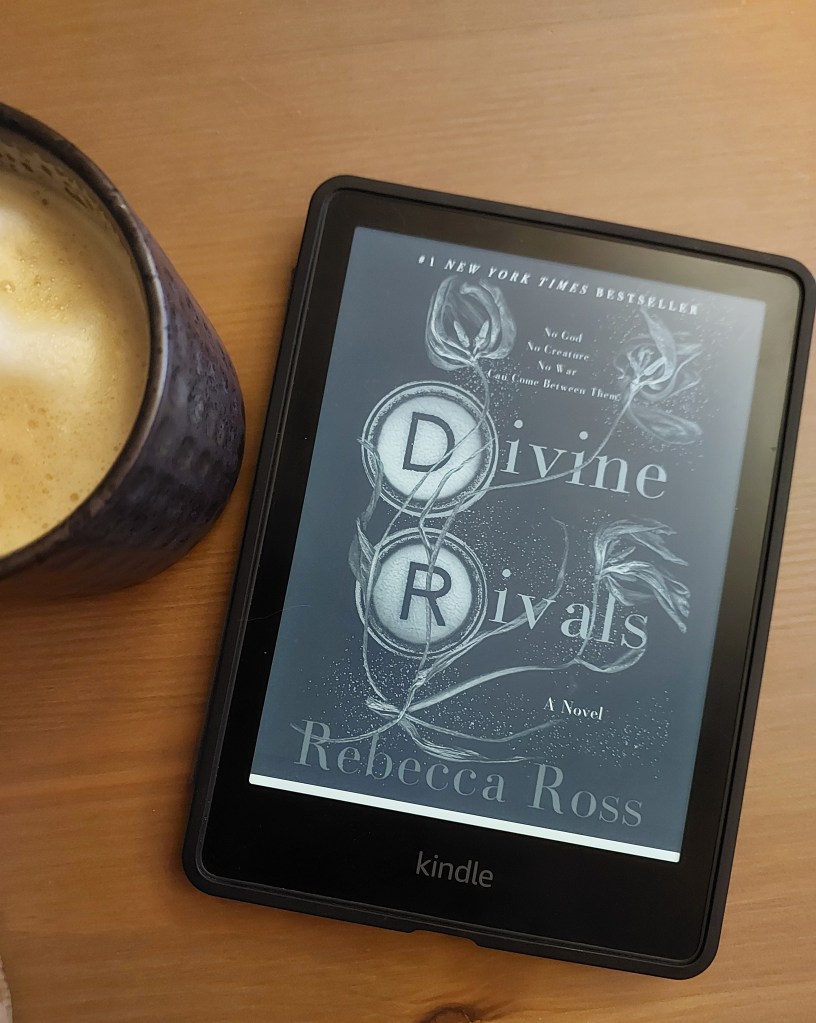
My god, this book is good. I’m not a romance enthusiast -far from it, actually. But with all the buzz swirling around it, I decided to give it a shot. And you know what? The buzz is justified, and I’m pleased to say Divine Rivals went beyond my expectations. It kept me hooked from beginning to end, prompting me to set aside my other reads and focus solely on it.
Despite having all the elements that would normally make me steer clear, like being a YA enemies-to-lovers romantasy, I found Devine Rivals to be an undeniably captivating page-turner. It is my first Rebecca Ross novel, and I have to say I loved her writing. The story flows beautifully without getting overly flowery.
Divine Rivals follows two young “rival” journalists, Iris and Roman, launching their careers amid a war of gods. Now, calling them “rivals” and “enemies” seems a bit of a stretch because sparks fly between them almost instantly, and thankfully (?) the whole enemies to lovers theme gets sorted out pretty quickly. Phew!
Both main characters being journalists adds a fresh, new perspective to the main characters. However, I felt Ross could have explored this aspect more. We don’t directly witness their writing skills, but we catch glimpses through their letters. The letters are a mixed bag for me. When delving into their world and lives, they are sharp and heartfelt, a joy to read (not in context. They don’t really have happy lives). However, when it comes to expressing their feelings for each other, whether in letters or thoughts, it sometimes feels a bit shallow. Yet, given their age, maybe that’s forgivable.
The strength of Divine Rivals lies in its exceptional character development. Both Iris and Roman undergo significant growth and evolution, making their journey throughout the story compelling and rewarding. Initially, I was drawn to Iris and didn’t pay much attention to Roman. However, as the story unfolded, my feelings shifted, and I found myself liking Roman more and gaining a better understanding of him. Conversely, my affection for Iris diminished. Despite this change in perspective, both characters remained likeable. Sure, I didn’t always agree with their choices, and I found myself rolling my eyes or even arguing with the book at times. Some things happened a bit too swiftly for my taste, but still, I couldn’t help but root for Iris and Roman. In the end, I’m not exactly the target audience.
The world-building is pretty basic for a fantasty setting with a “tell, don’t show” approach to the god’s war. The magic system is soft; the workings are not thoroughly explained; you just have to accept that it exists and move on. The world is not clearly defined either; sometimes feeling historical fantasy, other times contemporary. The effort put into character development seems greater than that for world building, leaving room for improvement-hopefully something explored in the sequel (which I’m definitely reading in February).
I didn’t find the story as emotional as most people. My cold, dead millennial heart needs more to feel things (see my review of Thor). While I love a well-written 350-400 page book, I think Divine Rivals could benefit from more pages. Because to me, things happen a bit too quickly and need to simmer more to be believable. If I believed in the depth of their relationship or the high stakes, this book could easily rip my heart out, but it settles for just a little stirring.
In conclusion, Divine Rivals pleasantly surprised me, proving that even a non- romance enthusiast like myself could find enjoyment in its pages. The hype around the book is entirely justified, as it exceeded my expectations, keeping me engrossed from start to finish. Overall, it is a captivating read with room for improvement.

 Peek-A-Book